Depends on age: 3h30 for children up to 6 years 4h30 for children over 7 years old
Location
ul. Saint Francis of Assisi Wincentego 92, Warsaw
It is important that plants grow
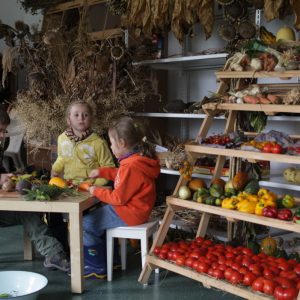
Children see how vegetables, fruits and herbs grow out of the soil and the sun.
What Plants Need
Water, earth, light and time shape what grows beautiful and strong.
Skills that remain
Simple work in the garden builds discipline and teaches children what brings effort.
Peace in the soil
Working with plants calms restless minds and stabilizes the spirit.
Find answers
Frequently Asked Questions
What is the focus of the botanical tour?
The tour focuses on recognizing local plant species, understanding the role of ecosystems and learning about how vegetation changes depending on the seasons on the farm and in the forest.
Is the botanical path available in winter?
Yes, it is! We offer a winter version of the tour, during which children learn about evergreen plants, recognizing species by the bark and how plants survived the frost.
Do the kids think anything on this trip?
Often, yes. Many of our botanical tours include a practical element, during which each child can plant a seedling to take home or plant it in our educational garden.
How much walking is provided during the trip?
The route is adapted to the possibilities of children and includes a quiet walk through the farm and surrounding green areas, usually between 1 and 1.5 km long with frequent stops.
Do we need to take the magnifiers or other equipment?
We provide all the necessary observation tools, such as magnifiers and plant recognition cards. Just take comfortable shoes and curiosity!
Are there poisonous plants on the route?
Our path is carefully chosen and safe. Educators always point out which plants are safe to touch and which should be observed from a distance, teaching children the principles of safety in nature.